Client-Side Rendering (CSR)
Client-Side Rendering (CSR) is a web rendering strategy where the content of a webpage is generated in the browser using JavaScript. Upon visiting the website, the user’s browser downloads a minimal HTML page, the JavaScript required to render the content, and then executes the JavaScript to generate the webpage dynamically. This approach is widely used in Single Page Applications (SPAs) for its fluid, app-like user experience.
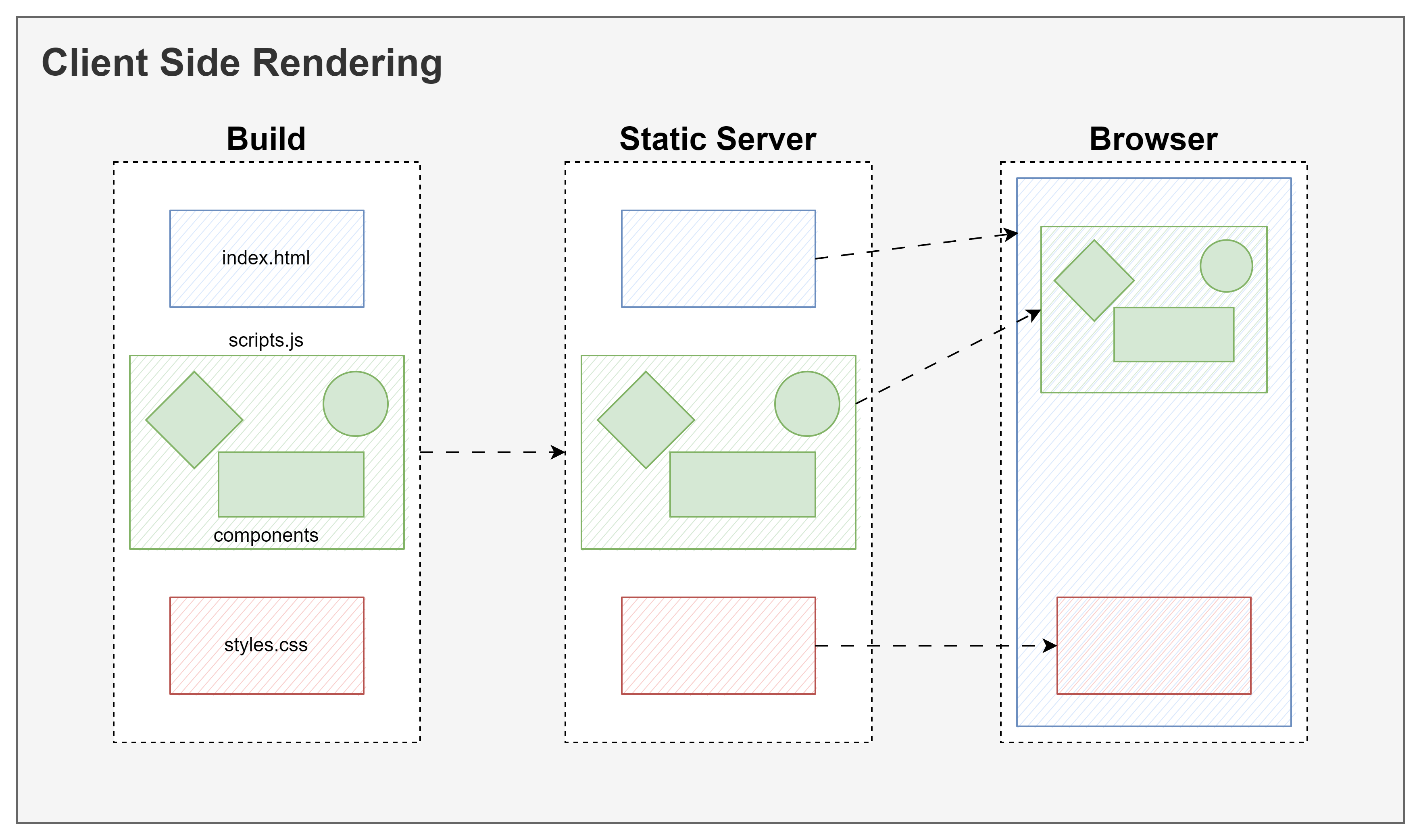
Use Cases
- Single Page Applications: Ideal for applications that require a fluid, app-like experience, minimizing server requests after the initial page load.
- Dynamic Content: When content needs to change frequently based on user interaction without reloading the page.
- Rich Interactive Applications: For web apps that need complex user interactions, animations, and transitions.
Drawbacks
SEO Challenges: Content rendered on the client side can be invisible to search engine crawlers, though this is improving with modern search engines.
Initial Load Time: The browser must download the JavaScript framework and application code before rendering the page, which can slow the initial page load.
JavaScript Dependency: Users with JavaScript disabled or with slow devices may have a suboptimal experience.
Server-Side Rendering (SSR)
Server-Side Rendering (SSR) involves generating the full HTML for a page on the server in response to a user’s request, before sending it to the browser. This allows the browser to display the content immediately without waiting for all JavaScript to execute, improving perceived performance and SEO since the content is already populated upon page load.
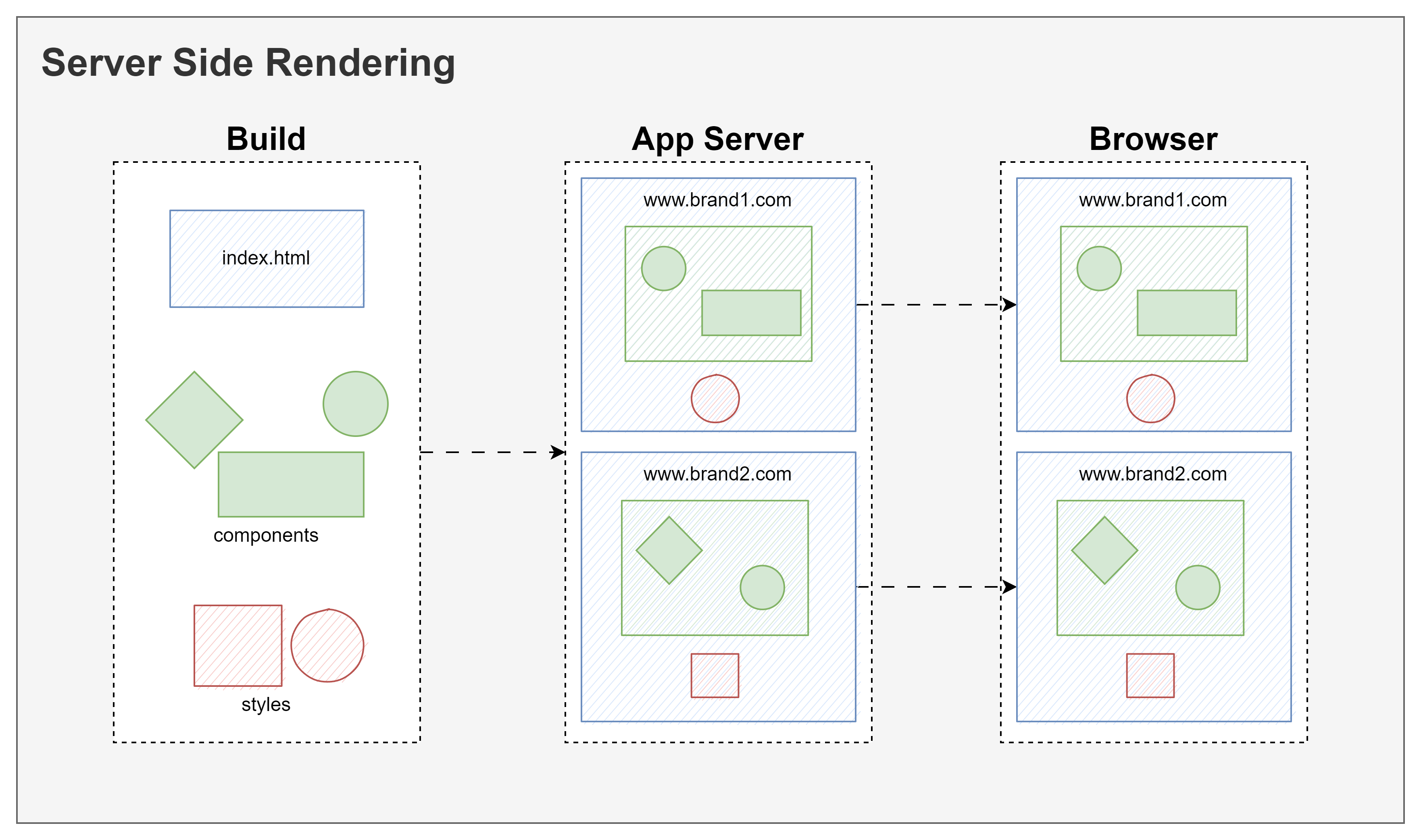
Use Cases
SEO-Intensive Websites: When SEO is a priority, SSR ensures that all content is available to search engines upon crawling.
Faster Initial Page Load: Users see the content immediately without waiting for all JavaScript to load and run, improving perceived performance.
Social Media Sharing: Pages are fully rendered for social media crawlers, ensuring accurate previews when links are shared.
Drawbacks
Server Load: Each page request requires rendering on the server, which can increase load and affect performance under high traffic.
Full Page Reloads: Navigating to a new page requires a new request to the server, which can lead to a less fluid user experience compared to CSR.
Static Site Generation (SSG)
Static Site Generation (SSG) is a methodology where web pages are generated at build time. Each page is pre-rendered into static HTML, allowing for fast loading times and improved SEO. These static pages can be served from a CDN, reducing server load and enhancing scalability. SSG is ideal for websites with content that does not change frequently, like blogs and documentation sites.
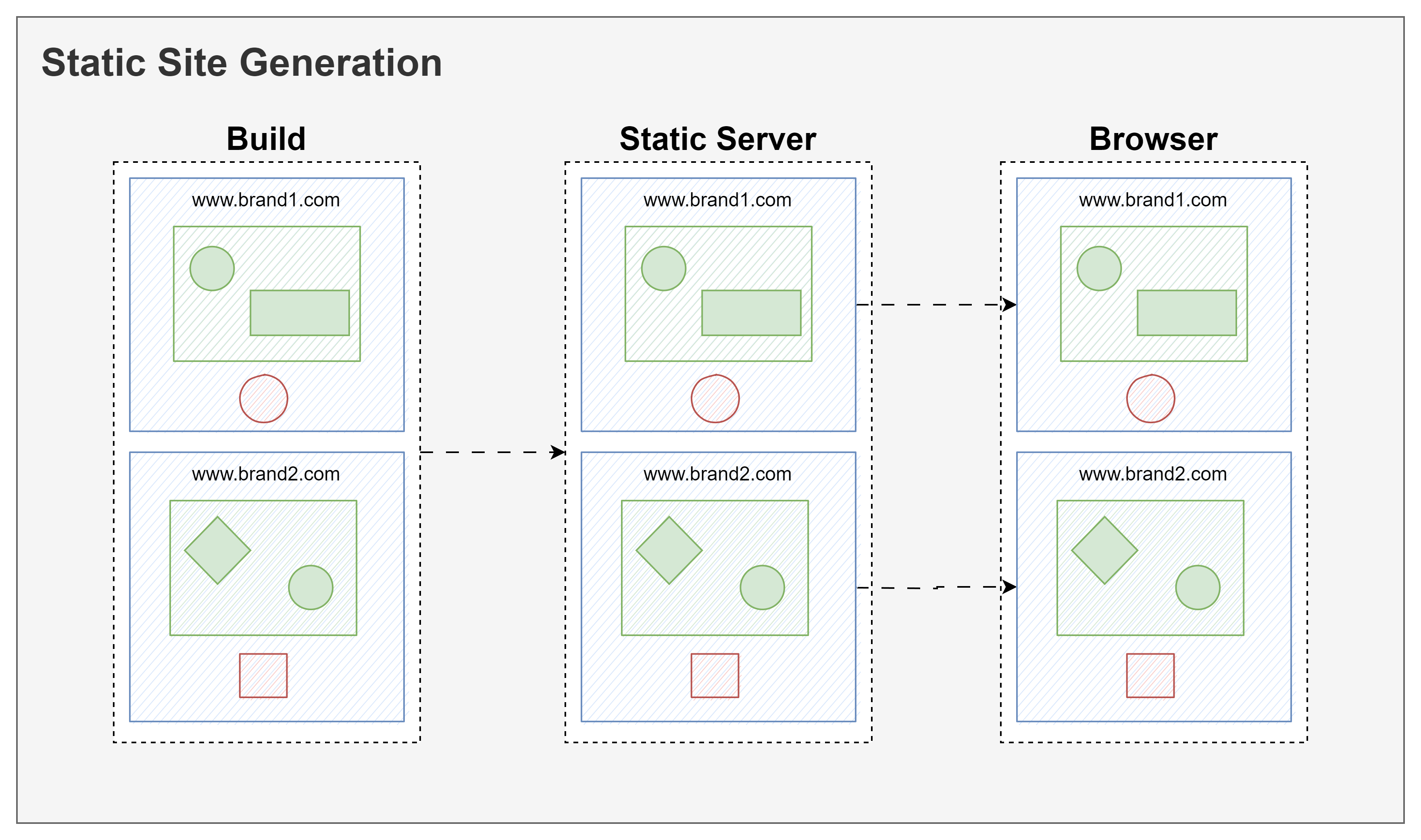
Use Cases
Blogs and Documentation: Content that doesn’t change often benefits from being generated statically for fast load times and improved SEO.
Marketing Websites: Static sites can be highly optimized for speed and SEO, making them ideal for landing pages and corporate websites.
E-commerce Sites (Product Listing): Static pages for products can be pre-generated for fast loading, enhancing user experience.
Drawbacks
Limited Dynamic Features: Real-time content updates or user-specific content requires additional client-side JavaScript or third-party services.
Build Times: For very large sites, build times can become lengthy, although incremental builds have mitigated this issue somewhat.
Incremental Static Regeneration (ISR)
Incremental Static Regeneration (ISR) combines the benefits of Static Site Generation with on-demand revalidation. It allows pages to be regenerated in the background after deployment, ensuring visitors always receive the most up-to-date content without sacrificing performance. This strategy is suitable for sites with content that updates periodically, offering a balance between static efficiency and dynamic flexibility.
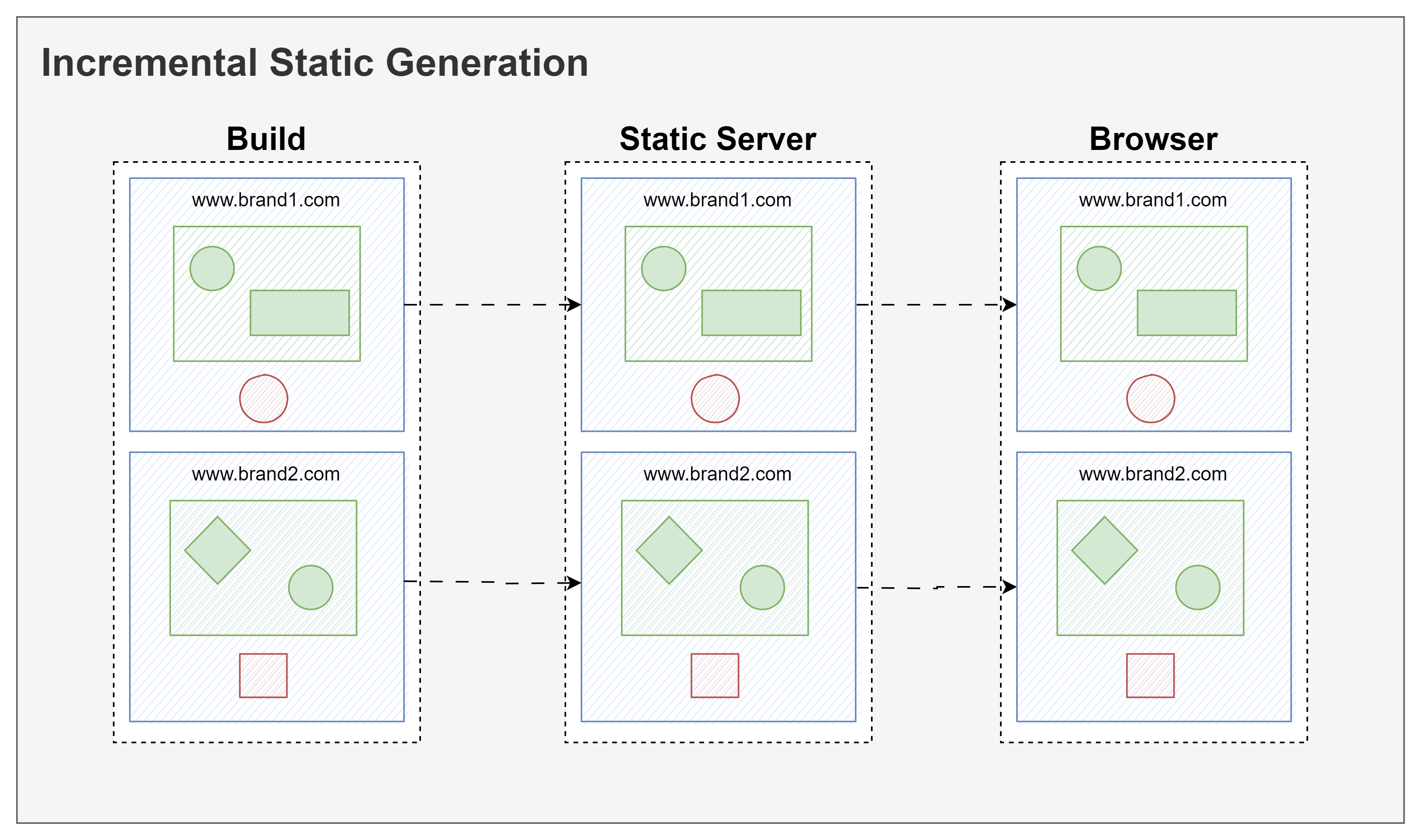
Use Cases
E-commerce Sites: Product pages that need to be updated regularly with stock levels or prices can benefit from ISR, combining the benefits of SSG with dynamic updates.
Content Sites with Frequent Updates: News sites or blogs that are updated frequently can use ISR to serve static pages that are periodically updated in the background.
User-Generated Content: Sites displaying content that changes based on user interaction can statically generate most of their content and use ISR for parts that change more frequently.
Drawbacks
Complexity: Implementing ISR can add complexity to your project, requiring a careful setup to manage the regeneration process effectively.
Stale Content: There’s a potential for users to see outdated content between regeneration intervals, depending on how the regeneration triggers are configured.
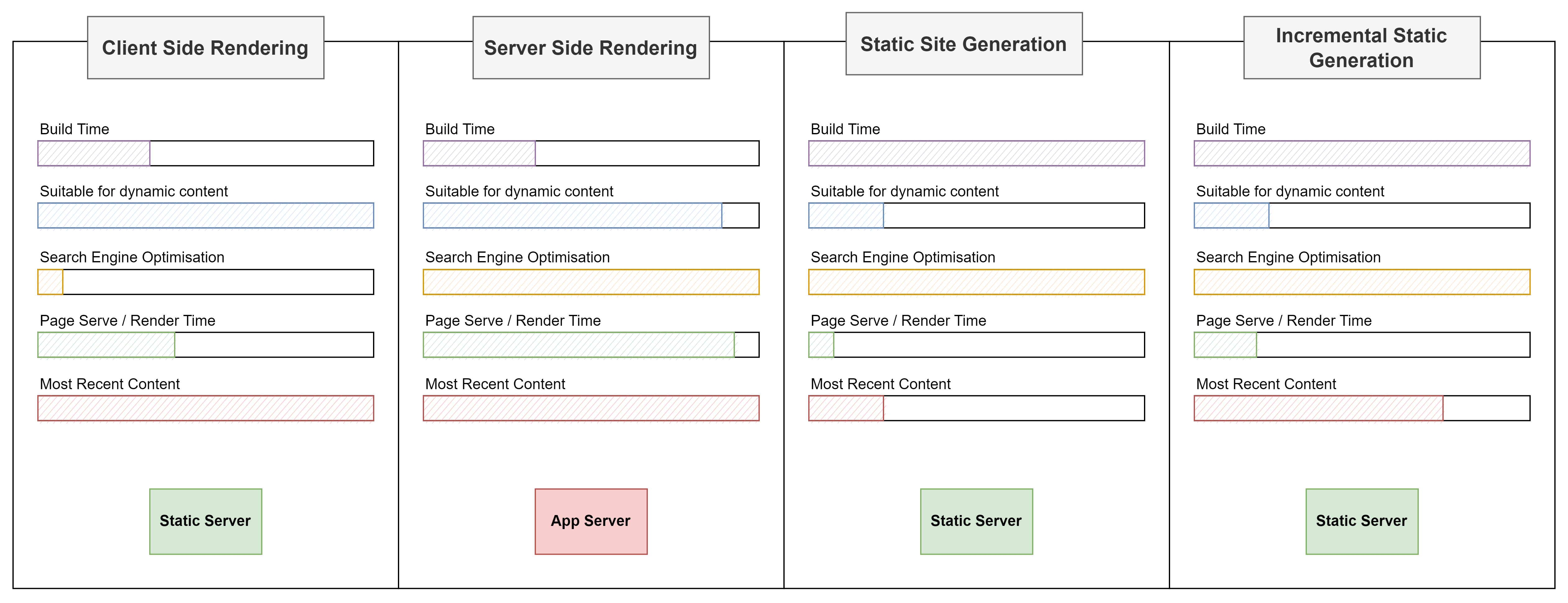
Comparison
- Build time: Lower value = better.
- Suitable for Dynamic Content: Higher value indicates the technique is more suitable when content is more dynamic.
- Search Engine Optimization: Higher value means more likely to perform well on search engines.
- Page Serve/Render Time: Being vague here on purpose, lower value means content is available for a user sooner which typically means a better user experience.
- Most Recent Content: A higher value typically means content is current and not stale.
- Static Server / App Server: Does this technique need to have a static server or an app server. Normally static servers consume a lot less resources than application servers.
Major Deciding Factors
Dynamic vs. Static Content
- Dynamic Content: For websites with content that changes frequently based on user actions or real-time data (e.g., social media feeds, interactive dashboards), CSR or SSR with Client-Side Hydration might be preferred. These methods allow for a more dynamic, app-like user experience, where content can update without the need for a full page reload.
- Static Content: For sites where the content doesn’t change often (e.g., blogs, documentation sites), SSG or ISR are excellent choices. They allow pages to be pre-rendered and served quickly from a CDN, improving load times and SEO.
User Experience and Interactivity
- High interactivity and the need for a seamless user experience favor CSR or SSR with client-side hydration, as they can offer more responsive interfaces without the need to reload the page.
- Websites prioritizing content accessibility and fast initial load times, with less emphasis on interactivity, might lean towards SSG or ISR, as they provide the content upfront without waiting for JavaScript to load and run.
SEO Requirements
- High SEO Priority: If SEO is crucial (for example, in e-commerce platforms, corporate websites, or blogs aiming to reach a broad audience), SSR or SSG might be preferable because they ensure that search engine crawlers can easily index the site content.
- Less SEO Dependency: Applications that are less dependent on search engine visibility, such as internal dashboards or apps requiring user authentication, might choose CSR for its simplicity and the rich user experiences it can provide.
Content Update Frequency
- Frequently Updated Content: Websites that require constant updates, like news sites or e-commerce platforms with changing inventory, might benefit from ISR or SSR. ISR, in particular, allows for static sites to update their content incrementally without rebuilding the entire site.
- Rarely Updated Content: For content that rarely changes, SSG offers an efficient solution by building the site once and serving it statically, reducing server load and improving performance.
Development and Maintenance Considerations
- The complexity of development and ongoing maintenance can also be affected by content nature. Dynamic, user-centric applications might require a robust frontend framework typically associated with CSR or SSR, potentially increasing development complexity.
- Static sites, while simpler to deploy and maintain, might not suit every content type, especially if interactive user engagement is a key component of the site’s purpose.
Scalability and Performance
- The expected traffic and performance requirements can influence the choice based on content type. High traffic sites with static content might lean towards SSG or ISR to leverage CDN caching and reduce server load.
- For dynamic, interactive sites where user experience cannot be compromised, solutions that blend SSR for initial load performance with CSR for subsequent interaction can be ideal, balancing scalability with performance.
Other Notable Concepts
Client-Side Rendering with Hydration (Universal or Isomorphic Rendering)
In the context of web development, hydration refers to the process where a page rendered by the server is made interactive on the client side with JavaScript. This approach aims for fast initial loading (thanks to SSR) and dynamic interactivity (thanks to CSR).
Stale-While-Revalidate SWR
A HTTP caching strategy that first returns the cached data (stale), then sends the fetch request (revalidate), and finally comes with the up-to-date data.
SWR does not directly fit into the categories of client-side rendering (CSR), server-side rendering (SSR), static site generation (SSG), or incremental static regeneration (ISR) because it is primarily a data fetching strategy rather than a page rendering or site generation approach. However, it can be used in conjunction with these rendering strategies, particularly in CSR and SSR, to enhance the user experience and application performance.
Serverless Functions
Often used with SSR, SSG, and ISR for dynamic data fetching or API routes. Serverless functions can run backend code without provisioning or managing servers, scaling automatically with usage.
Edge Rendering
Similar to SSR, but the rendering occurs at edge locations closer to the user to minimize latency. This is particularly effective when used with a global CDN.
Client-side Routing
Enhances SPAs by enabling navigation between pages without refreshing the page, improving the user experience and making web applications feel more like native apps.
Micro Frontends
Micro frontends extend the concept of microservices to the frontend development realm. They allow for a web application’s user interface to be broken down into smaller, independent parts that can be developed, tested, and deployed separately. This approach enables multiple teams to work autonomously on different features or parts of a web application without stepping on each other’s toes, fostering better scalability, maintainability, and agility in development processes.
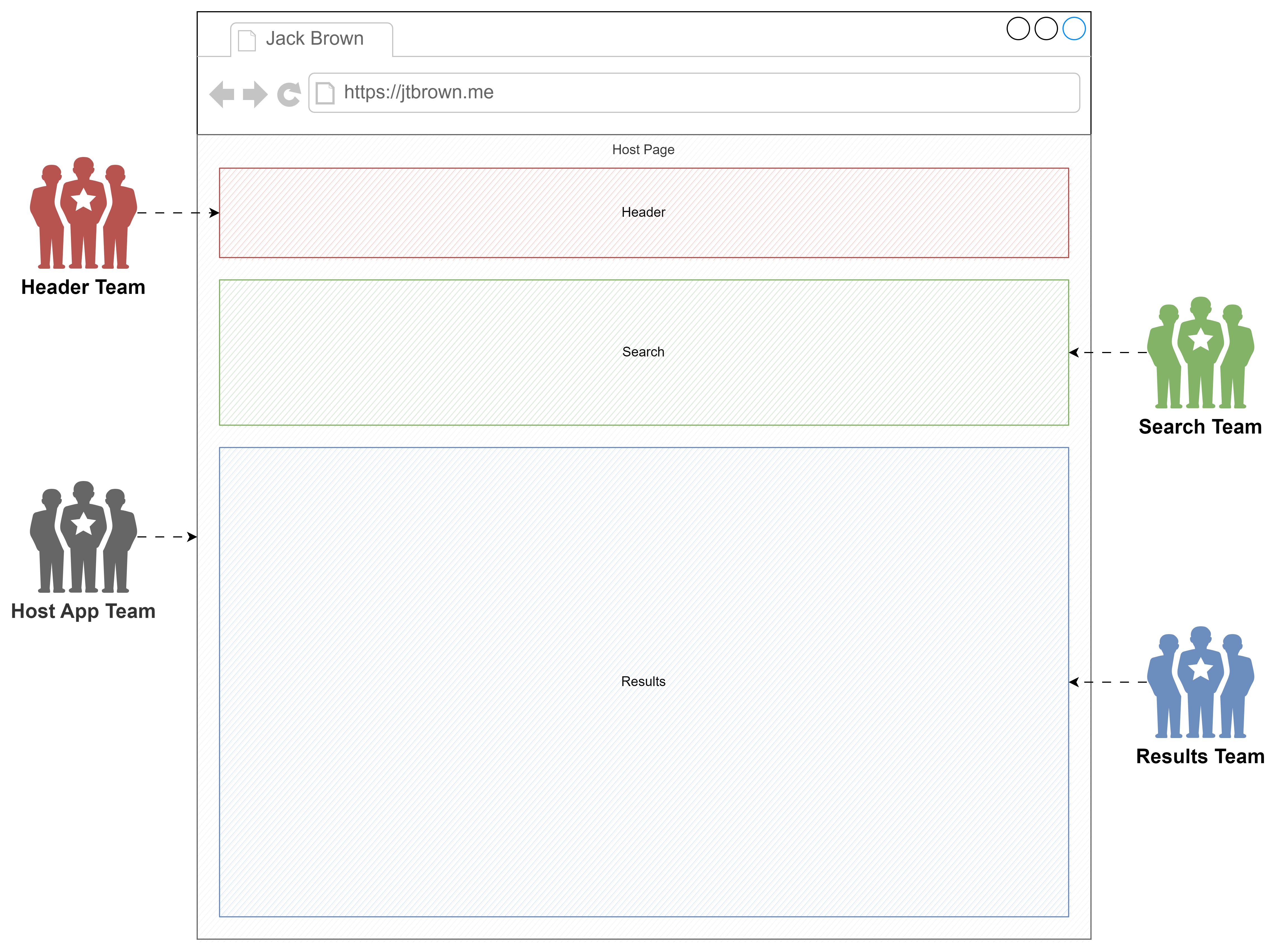
Micro frontends can incorporate various web development techniques, including Client-Side Rendering (CSR), Server-Side Rendering (SSR), Static Site Generation (SSG), and Incremental Static Regeneration (ISR), depending on the needs of each part of the application. They are more about the architectural approach to organizing and integrating web applications than about the specific technology used for rendering or data fetching.
Types of Micro Frontends
IFrame: An older and simpler way to integrate micro frontends by embedding a page within another page. It’s easy to implement but comes with significant limitations in terms of styling, performance, and seamless integration.
Web Components: Web Components allow for the creation of reusable custom elements, with their functionality encapsulated away from the rest of the code. This technology provides a standards-based approach to building micro frontends, ensuring good isolation and compatibility across different parts of the application.
Module Federation: Module Federation, especially prominent with Webpack 5, allows for separate builds to dynamically share code and functionality at runtime. This is powerful for micro frontends as it enables different teams to develop independently and deploy their parts of the application without needing to compile the whole application together. It supports lazy loading and version management, making it a flexible and efficient choice for integrating micro frontends.
Edge Side Includes: ESI is a simple markup language that allows for the inclusion of web components on the edge server level. It’s primarily used for server-side composition of web pages, enabling parts of the page to be fetched and rendered from different sources. This method can significantly improve performance and reduce the load on backend systems.
Server-Side Template Composition: With this method, micro frontends are composed on the server by including different templates or components into the final HTML before it’s sent to the client. This approach is beneficial for SEO and initial load performance since the entire page is served in one go. However, it requires server-side support and careful coordination between the different components.
Knowledge Test
Internal Project Management Tool
Our goal is to develop an internal project management tool exclusively for company use. This application must provide a highly interactive user interface to manage tasks, projects, and collaborations in real time. The application will be used by employees who have modern browsers and are connected to the company’s high-speed network. Search engine optimization is not a concern due to the application’s internal nature. The priority is on fluid, app-like user experiences with instant feedback and minimal server requests after the initial load. The ability to work offline or with limited connectivity is a plus, leveraging service workers and browser caching.
Non Functional Requirements:
- User Load: Must support concurrent use by up to 500 employees during peak hours.
- Data Refresh Rate: Capable of handling real-time data updates with a latency of no more than 2 seconds.
- Accessibility: Should be fully accessible within the company’s internal network, ensuring data security and privacy.
- Offline Functionality: Must provide limited functionality offline or in poor connectivity conditions, caching data for up to 24 hours.
Corporate Blog Platform
We are creating a corporate blog platform aimed at showcasing our industry expertise, attracting potential clients, and improving our online presence. The platform needs to ensure excellent search engine optimization to maximize visibility and drive traffic. Content will be periodically updated by our marketing team, requiring a system that can serve the latest content efficiently. The user experience, including fast page load times and content availability for social media sharing, is crucial. The blog will be read on a variety of devices, making responsive design and accessibility paramount.
Non Functional Requirements:
- Global Reach: The website should be accessible globally, with content localization support for at least 5 major languages.
- SEO Performance: Pages must be fully rendered within 200 milliseconds to ensure prompt crawling and indexing by search engines.
- Scalability: Capable of scaling to accommodate up to 10,000 users simultaneously without degradation in performance.
- Security: Implement robust security measures to protect against cross-site scripting (XSS) and SQL injection attacks.
Marketing Website for a New Product Launch
Our objective is to develop a marketing website for our upcoming product launch. The site will serve as a digital brochure, providing information about the product, pricing, FAQs, and contact information. It’s essential that the site loads quickly, is reliable, and can handle high traffic volumes around the launch period without compromising performance. Search engine optimization is critical to ensure visibility to potential customers. The content on the site will be relatively static, with updates made infrequently as product details or promotions change.
Non Functional Requirements:
- Load Time: First Contentful Paint (FCP) should occur within 1 second for users on standard broadband connections.
- Content Update Frequency: Able to rebuild and deploy the site within 5 minutes of content updates to ensure documentation is current.
- User Load: Designed to efficiently serve up to 100,000 page views per day.
- Hosting Efficiency: Optimized for hosting on a CDN to leverage edge caching for global content delivery.
E-commerce Platform for Limited Edition Items
We’re building an e-commerce platform focused on limited edition items where product listings and stock levels change frequently. The platform needs to combine the speed and SEO benefits of static site generation with the flexibility to update content dynamically as new products are released or stock changes. User-generated content, such as product reviews and ratings, should be reflected in a timely manner without requiring a full site rebuild. The platform must scale efficiently to handle traffic spikes during new product launches or promotional events, ensuring a smooth user experience.
Non Functional Requirements:
- User Load: Must support up to 20,000 concurrent users during flash sale events.
- Content Dynamism: Product pages need to reflect inventory changes within 10 seconds to minimize the chance of overselling.
- Requests per Second: The system should handle at least 1,000 requests per second during peak traffic, ensuring smooth user experiences.
- Resilience: Deployed across multiple data centers to provide at least 99.9% availability, even during high traffic events or partial outages.